Headful: A Serif Display Font for Sophisticated Editorial Design
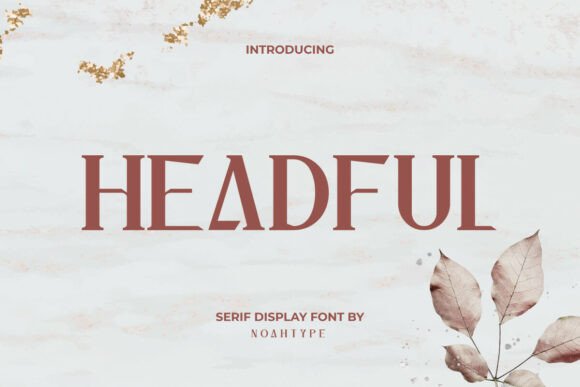
Choosing the right font for a lifestyle blog redesign can feel like searching for the perfect shade of blue in a sea of options. When I first encountered Headful, its sharp edges and striking vertical stress immediately stood out, offering a sense of high-fashion elegance that felt both modern and timeless. As a display font, Headful is not just about aesthetics—it's about creating a visual rhythm that supports editorial mood and reader engagement.
Headful for Lifestyle Blog Headers and Magazine Covers
When I tested Headful on a lifestyle blog header, the results were immediate. The serif display typeface brought a level of sophistication that paired beautifully with minimalist photography and curated content. It was ideal for large titles, where the boldness of the Headful font helped draw attention without overwhelming the layout. In a digital magazine layout, it worked equally well as a cover title, giving the publication a polished and professional identity that resonated with a fashion-forward audience.
The use of Headful as a display font in this context wasn’t just about looking good—it was about reinforcing the brand’s voice. Its clean lines and structured form made it easy to pair with other design elements, from color palettes to iconography, while still maintaining a strong visual hierarchy.
Headful in Recipe Ebooks and Coaching Workbooks
In a recent project involving a recipe ebook, I found that Headful added a touch of refinement to chapter openers and section headings. The font’s sharp edges gave the text a crisp, elegant feel that complemented the high-quality food photography and detailed instructions. For a coaching workbook, it served as an excellent choice for pull quotes and key takeaways, standing out visually while remaining legible even in smaller sizes.
What I appreciated most was how Headful maintained readability across different platforms. Whether viewed on a mobile screen or printed in a PDF, the font retained its clarity and structure. This made it a reliable choice for long-form content and print materials where consistency is essential.
Headful for Newsletter Graphics and Digital Magazines
For a creator newsletter, Headful became a go-to choice for headlines and feature titles. Its sophisticated serif style aligned perfectly with the tone of the publication, which focused on personal development and creative inspiration. In a digital magazine layout, it provided a striking contrast against light backgrounds, making it ideal for decorative accents and callout boxes.
One thing to note is that while Headful excels in display roles, it may not be the best fit for dense paragraphs or small captions. However, when paired with a clean sans-serif font for body copy, it created a balanced and professional look. This kind of font pairing is crucial in editorial design, ensuring that the overall layout remains both stylish and functional.
Headful in Wedding Guides and Printable Planners
Using Headful in a wedding guide was an exercise in elegance. From event titles to venue highlights, the font brought a sense of occasion and formality that elevated the entire design. In a printable planner, it worked well for section headers and date markers, adding a touch of class to an otherwise practical tool.
The versatility of Headful as a display font makes it suitable for a wide range of editorial uses, but it’s important to consider the context. While it shines in headlines and titles, it’s best avoided in body copy or formal reports where a more neutral and readable font would be more appropriate.
Headful and Readability Across Platforms
As someone who frequently works with both digital and print media, I appreciate how Headful performs across different formats. On-screen, its sharp edges remain clear even at smaller sizes, which is rare for many serif fonts. In PDF exports and print materials, the font maintains its structure and elegance, making it a reliable choice for publications that require a consistent look across multiple platforms.
Before using Headful in any commercial project, it’s always wise to check the included styles, alternates, ligatures, weights, and multilingual support. Ensuring that the font meets the specific needs of your project—whether it’s an ebook, a template, or a paid newsletter—is essential for a seamless user experience.