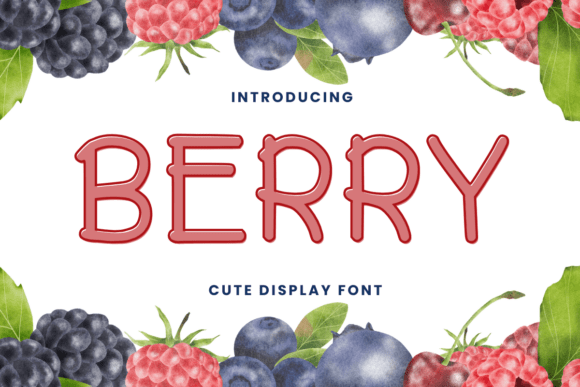
Berry: A Sweet Display Font for Modern Branding
Opening a fresh brand board, I was greeted by the blank canvas of possibility. It was time to test Berry — a display sans-serif font that promises a touch of sweetness in every curve and contour. As I began sketching out a logo concept for a boutique skincare brand, it became clear that Berry wasn’t just another font; it was a visual whisper of summer, ripe with charm and character.
Berry on a Skincare Brand Logo
Berry is a deliciously simple and rounded, cute display sans-serif font, featuring soft, thick outlines that give it a delicious, pliable texture reminiscent of fresh summer fruit. This appealing Berry found its way onto a minimalist logo draft for a new natural skincare line. The softness of the curves paired beautifully with the clean lines of the product packaging mockup, creating a sense of approachability and freshness that aligned perfectly with the brand’s ethos.
The font's thickness gave it a tactile quality, almost as if you could feel the smoothness of a ripe berry between your fingers. It stood out against the muted pastel palette of the brand board without overpowering it. I noticed how Berry performed well in both digital and print formats, maintaining clarity even at smaller sizes on business cards and social media posts.
Berry in Social Media Graphics and Website Headers
Berry is a display font that shines brightest when used for short, impactful phrases. I placed it on an Instagram post header for the same skincare brand, and the results were instantly engaging. The font’s playful yet refined look made the headline stand out while still feeling inviting. On the website header, it added a subtle layer of personality to the otherwise clean design, helping to establish a warm and friendly brand voice.
I also experimented with Berry on a landing page banner for a local bakery. The font’s soft, rounded edges complemented the imagery of freshly baked goods, evoking a sense of comfort and indulgence. However, I noted that Berry may not be ideal for long paragraphs or body text due to its display nature. It works best as a headline or accent font, where its unique style can make a statement without overwhelming the reader.
Berry in Packaging Mockups and Business Cards
When I applied Berry to a product label mockup for the skincare brand, the result felt cohesive and elegant. The font’s pliable texture translated into a visually pleasing contrast against the minimalist background. It didn’t clash with the brand’s color scheme and instead enhanced the overall aesthetic with a touch of whimsy.
On a printed business card, Berry added a personal touch that elevated the design from generic to memorable. The font’s readability was excellent, even in small sizes, and it maintained its charm across different materials and finishes. For those looking to create a strong first impression, Berry is a great choice for any branding collateral that needs to stand out.
Berry and Font Pairing: Creating Harmony in Design
Berry is a display font that pairs well with a variety of other typefaces. I tested it alongside a clean sans-serif font for body text, and the combination worked seamlessly. The contrast between Berry’s soft curves and the more structured sans-serif provided a balanced visual hierarchy.
For a more sophisticated look, pairing Berry with a serif font for supporting text created a sense of elegance. It was especially effective in editorial design, where Berry served as a headline and the serif font handled the body copy. When using Berry, it’s important to consider the context and ensure that the font doesn’t become too dominant or distract from the message being conveyed.
Before finalizing any client work, it’s always wise to test Berry in various scenarios and platforms. Whether it’s a logo draft, a brand board, or a packaging mockup, seeing how the font behaves in real-world applications can help determine its suitability for the project at hand.
Remember to check the commercial font licensing before using Berry in client work, brand identity, packaging, templates, merchandise, websites, digital products, or print-on-demand products. Ensuring proper usage rights will protect both your work and the integrity of the font itself.